In Lake Worth Beach's Historic Districts, Your Insurer and the City Don't Always Agree on the Right Window
September 17, 2026
September 17, 2026
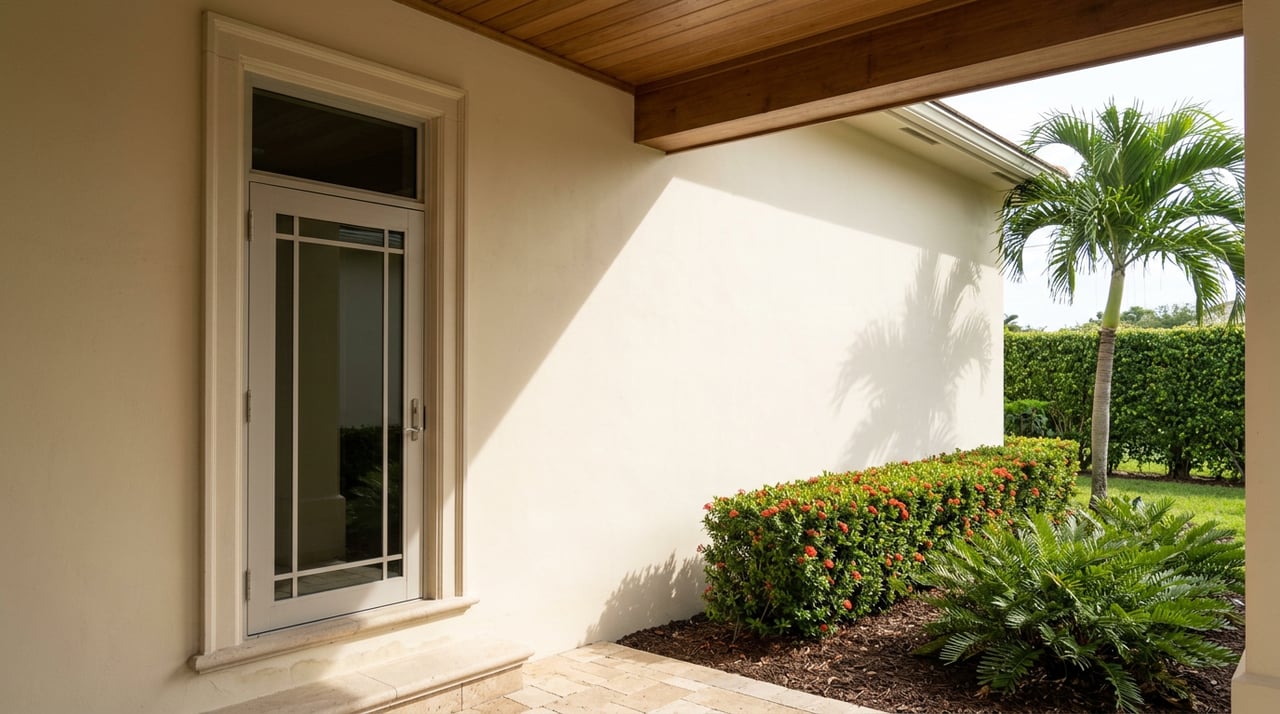
In 2021, a property owner on North Palmway in Lake Worth Beach's Northeast Lucerne Historic District tried to do the responsible thing. Aging windows and doors were failing, storm season was coming, and the owner applied to replace them with new impact-rated units. City staff reviewed the application and recommended denial. The reason had nothing to do with wind resistance or code compliance. The glass was tinted, and its visible light transmittance fell below the 70 percent minimum the district's design guidelines require.
That single case file, still sitting in the city's public record as HRPB Project Number 21-00100071, captures a friction that a lot of sellers in Lake Worth Beach's historic core don't see coming until it's sitting between them and a closing date. The upgrade that satisfies a wind mitigation inspector and the upgrade that satisfies the Historic Resources Preservation Board are not automatically the same upgrade. Getting one approved does not guarantee the other, and the sequence you follow determines whether a hurricane-hardening project adds value to a listing or becomes a repair item a buyer's inspector flags.
Florida's building code cares about structural performance. Once a window is rated for the wind-borne debris zone that covers Palm Beach County, it can go in almost anywhere in the county without a second look from the state. Lake Worth Beach's Historic Preservation Ordinance asks a different question entirely: does this alteration read as compatible with the district around it.
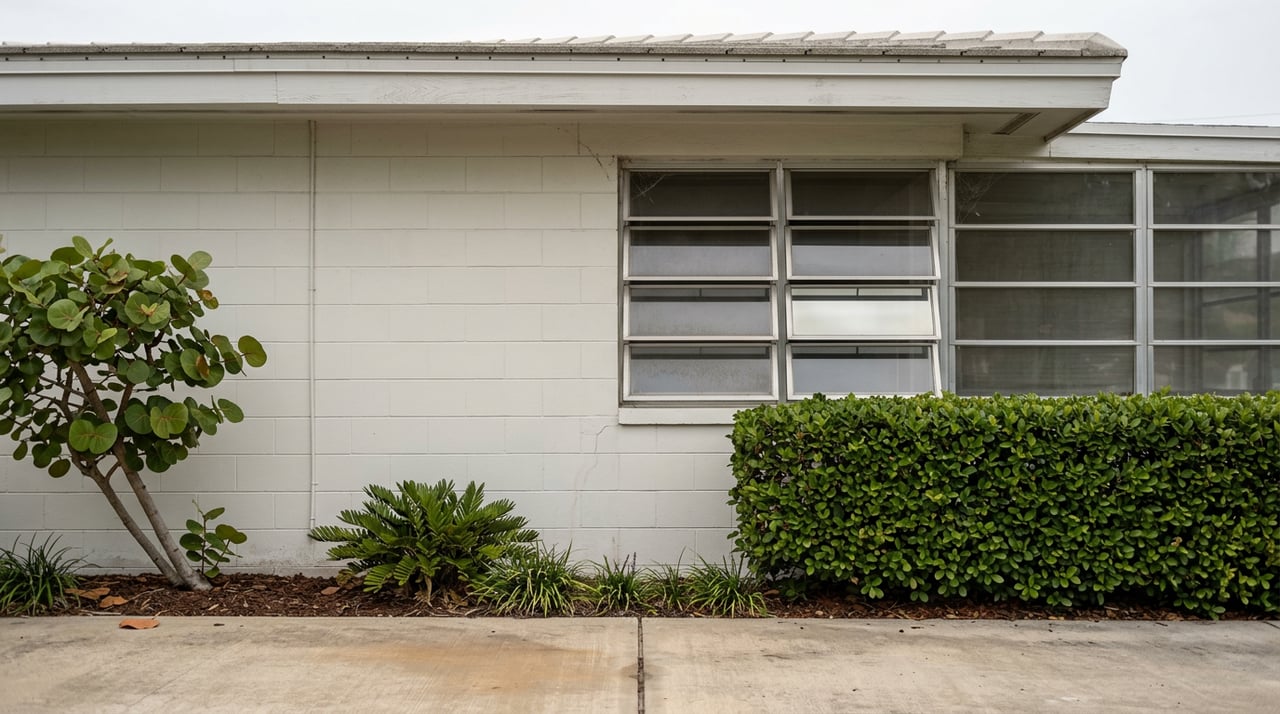
The North Palmway case shows how literally that standard gets applied. The property itself was built in 1997, outside the district's period of significance of 1915 through 1952, and was classified as a noncontributing structure. That did not exempt it from review, because the ordinance requires any street-visible alteration on a noncontributing property to stay compatible with the contributing structures nearby. Staff pointed to the design guidelines' language that windows in the district historically used clear glass, made clear glass the benchmark, and recommended against the darker tint the homeowner had proposed.
The lesson isn't that impact windows get rejected in Lake Worth Beach. Contractors who work in these districts regularly get impact products approved by matching sightlines, muntin patterns, and glass clarity to what the board expects. The lesson is that a Certificate of Appropriateness, known locally as a COA, has to clear before a building permit is even issued for exterior work in any of the city's six historic districts. Skip that step, or treat it as a formality, and you can end up mid-project with a stop-work order or a denied application while hurricane season keeps moving.
Lake Worth Beach's Historic Resources Preservation Board oversees six local historic districts, each with its own period of significance and its own mix of contributing and noncontributing structures.
| District | Character | What the record shows |
|---|---|---|
| College Park | 1920s land-boom bungalows with post-war infill, listed on the National Register in 2001 | 90 contributing structures, 33 noncontributing |
| Old Lucerne (Parrot Cove) | Early frame vernacular near the Intracoastal, built roughly 1913 to 1951 | 346 total structures, 218 contributing, 128 noncontributing |
| Old Town | The roughly 16-acre commercial core of downtown, significant from 1912 to 1949 | Listed on the National Register in 2001 |
| Northeast Lucerne | Residential blocks north of Lake and Lucerne Avenues, period of significance 1915 to 1952 | Still expanding growth through the present |
| Southeast Lucerne | Mirrors Northeast Lucerne's early development pattern, south of Lake and Lucerne Avenues | Separated from Northeast Lucerne by the Old Town commercial core |
| South Palm Park | A roughly 60-block district bounded by Bryant Park and the Intracoastal Waterway | Mix of early wood-frame, bungalow, and Mission-era homes with later Art Deco and masonry infill |
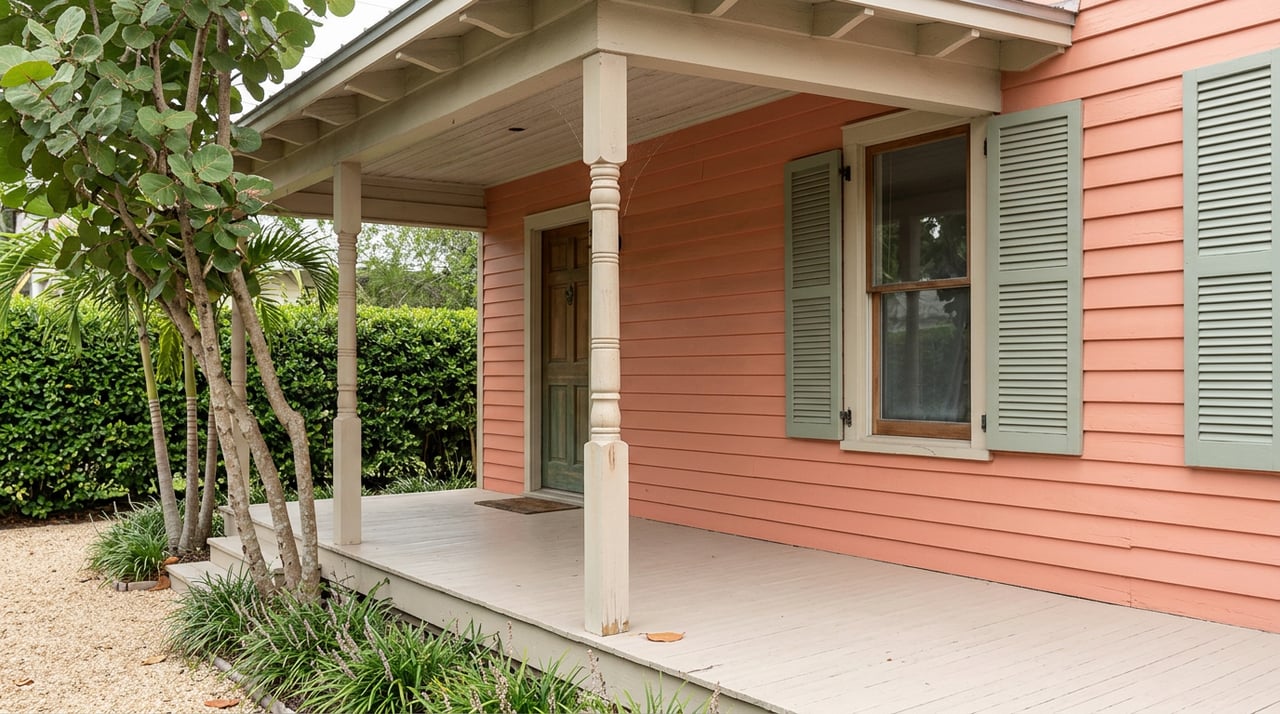
The city's broader housing stock reinforces why this matters at scale rather than as an edge case. A 2016 accounting of the city's building stock, cited by the city itself, put the number of surviving cottages at roughly 1,000, which the source described as the largest concentration of that housing type in Florida. A meaningful share of what's for sale in Lake Worth Beach's core neighborhoods sits inside one of these six districts, which means a meaningful share of listings will run into COA review the moment an exterior alteration is on the table.
Florida's House Bill 803 took effect statewide on July 1, 2026, and it changes what counts as a permit-exempt project. Residential work valued under $7,500 can now qualify for an exemption from a standard building permit, covering things like interior painting, flooring replacement, cabinet swaps that don't move plumbing, drywall repairs, and other non-structural cosmetic work. The city has been explicit that this exemption is not automatic. Property owners still have to apply and get city approval before starting.
More to the point for a historic district seller: the exemption doesn't touch the Historic Preservation Ordinance. The city's own guidance states plainly that projects claiming the HB 803 exemption still have to comply with the Land Development Regulations and with the Historic Preservation Ordinance if the property sits in a designated district. Window and door work has never been on the small-project exemption list to begin with, since it's exactly the kind of street-visible alteration a COA exists to review. If a seller or a buyer's contractor assumes the new state law simplifies hurricane hardening in these six districts, that assumption is wrong, and it's the kind of wrong that surfaces during a due diligence period rather than before.
While the COA process runs on its own timeline, a separate clock is ticking for anyone trying to insure one of these homes. Citizens Property Insurance requires a four-point inspection, covering roof, electrical, plumbing, and HVAC, for applications on homes more than 20 years old. Private carriers set their own age triggers, and they tend to land in a similar range. Given that College Park's contributing homes date to the 1920s and 1940s, Old Lucerne's run from 1913 to 1951, and Old Town's commercial core traces to 1912, essentially every contributing structure in these districts will need a four-point report before a buyer's policy binds, regardless of what condition the home is actually in.
Wind mitigation inspections sit alongside the four-point report and document features like roof shape, roof deck attachment, and opening protection that insurers use to calculate premium credits. A hip roof and impact-rated openings can both support meaningful credits. That's exactly why a seller might be tempted to install impact windows quickly before listing. It's also exactly why the COA sequencing matters. An impact window installed without a cleared COA, or with a glass tint that doesn't match district guidelines, is a project a title company or buyer's attorney can flag during their own review, and unwinding it after the fact costs more than doing it in order the first time.
One more county-level detail worth knowing: Palm Beach County sits outside the High-Velocity Hurricane Zone that covers Miami-Dade and Broward, so window products here follow the standard Florida Building Code rather than the stricter Miami-Dade product-approval list. That doesn't relax anything at the city level. It just means the state code bar and the city's design-review bar are two separate conversations, and a seller needs both cleared, not just one.
Does every exterior change in a Lake Worth Beach historic district need a COA? Most do. The city's guidance states a Certificate of Appropriateness is required for all exterior alterations to structures within the six historic districts and to individually designated landmarks, and that the COA has to be in place before a building permit is issued.
Does the new HB 803 exemption mean I can skip city approval for small projects? Not automatically, and not for historic district exterior work. The exemption applies to specific interior and cosmetic projects under $7,500, requires the city's sign-off before work begins, and does not override the Historic Preservation Ordinance for properties inside a designated district.
If my home is noncontributing, does that mean I skip review? Not necessarily. The North Palmway case involved a noncontributing structure, and the city still required a COA because the alteration was visible from the street and had to remain compatible with the surrounding district.
If you're weighing a listing timeline against a pending hurricane upgrade in one of Lake Worth Beach's historic districts, it's worth talking through the sequencing before a single window order goes in. Omar Santamaria works with sellers across these neighborhoods on exactly this kind of timing question, and the team is glad to help you map out what needs city approval, what an insurer will ask for, and how to line those two clocks up before you list.
Stay up to date on the latest real estate trends.
Every move has a story. Whether you're relocating across the state, looking for more space, simplifying life, pursuing a new opportunity, or navigating an unexpected transition, the best moves aren't just about real estate. They're about creating a life that better reflects who you are today and where you want to go next. You don't have to figure it out alone. Let's create a plan built around your goals, your lifestyle, and the chapter you're ready to write next.