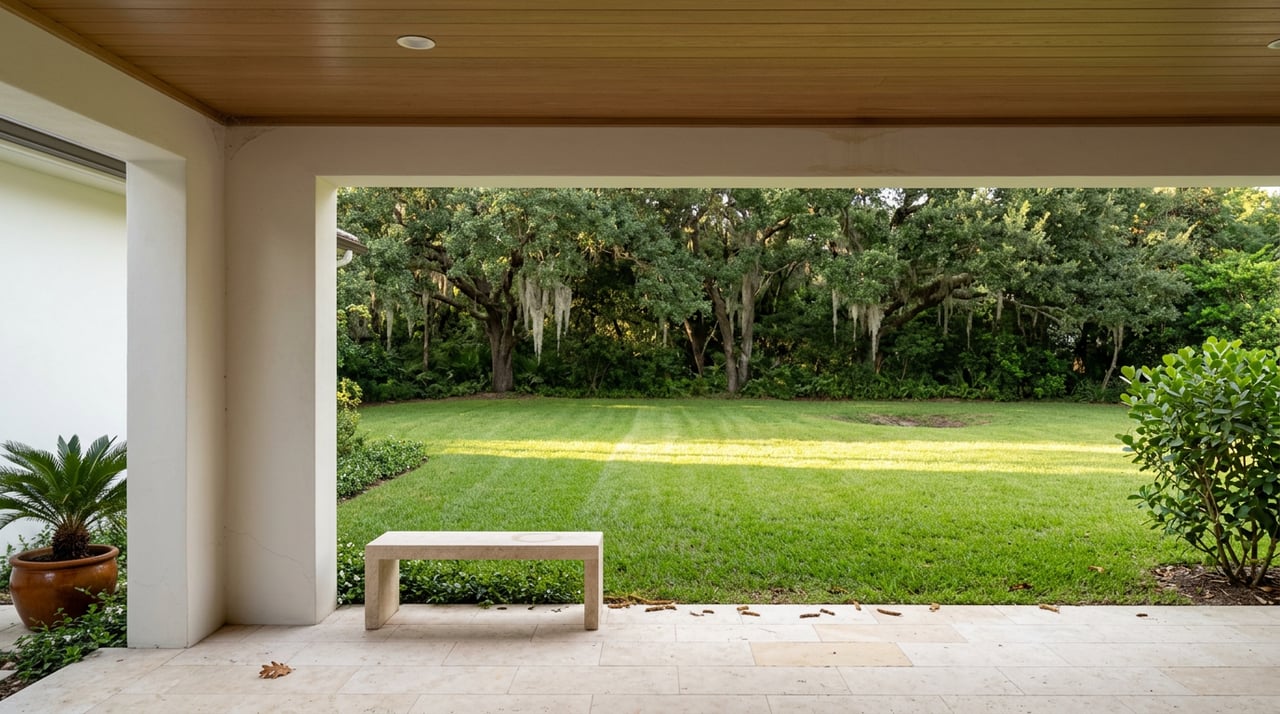
The Wellington Summer Market Isn't Slow. It's Running on a Different Clock.
July 16, 2026
July 16, 2026
Two Wellington medians landed in 2026, four months apart, and they tell opposite stories. In March, the median sale price sat at $655,000 with homes moving in 63 days. By July, the median had climbed to $759,000 while average days on market stretched to 148. A national buyer pulling those two numbers off a portal would conclude that Wellington got more expensive and slower at the same time, which reads like a market breaking down. It isn't. It's a market doing exactly what it does every year, filtered through a calendar that most out-of-town buyers never see.
The thesis worth carrying into any Wellington offer this summer: the village runs on a bimodal buyer pool tied to the equestrian season, and the July data doesn't describe a softer market so much as a different market with a different pricing logic. Read it correctly and July is where negotiability lives. Read it wrong and you overpay for a home whose seller is still mentally in March.
Before the market data, the underwriting math. A common assumption from second-home buyers is that a Wellington property can carry itself during the winter circuit by renting to visiting riders, grooms, or owners. That path exists, but it is not casual. Wellington requires a Vacation Rental Special Use Permit for each unit, plus an annual Business Tax Receipt, before a home can be legally offered as a short-term rental. Neither is granted by simply listing on a booking site.
That regulatory step matters because it changes the price a rational buyer will pay. If a home near the showgrounds can only be leased seasonally on paper, the "I'll cover carry during WEF" spreadsheet needs the permit path priced in before closing, not after. Sellers who assume every buyer plans to rent are competing with buyers who have already read the ordinance and adjusted their offer accordingly.
Wellington's competitive window is defined by two dated events. The 2026 Winter Equestrian Festival ran 13 weeks at Wellington International, from December 31, 2025 through March 29, 2026, drawing riders from more than 40 countries and roughly 250,000 spectators across the season. Palm Beach Polo Season overlapped and extended it, running December 28, 2025 through May 3, 2026 at the National Polo Center. Adequan Global Dressage Festival added a parallel calendar at Equestrian Village.
That schedule shows up in the numbers. Compare the two 2026 snapshots side by side:
| Metric | March 2026 | July 2026 |
|---|---|---|
| Median sale price | $655,000 | $759,000 |
| Days on market | 63 | 148 |
| Homes sold in month | 87 | 71 |
| Median list price | Not directly reported | $849,999 |
| Prior-year list comp | — | $1,500,000 in July 2025 |
The higher July median is not evidence that Wellington got more expensive. It's evidence that a different slice of the inventory is transacting. Entry-level and mid-market homes that would have moved in March are now sitting, so the mix skews toward higher-priced closings. Slower absorption at a higher median is the fingerprint of a seasonal buyer pool that has left the field, not a broader market moving up.
The list-price shift year over year looks alarming until you break it apart. Median list price in July 2026 was $849,999, against $1.5 million in July 2025. Single-family list medians moved from $3.9 million to $965,000. Condo list medians moved from $497,500 to $414,500.
A drop of that magnitude on the top end does not describe a value crash. It describes composition. Fewer trophy listings are being brought to market in the summer window, because sellers of $3M-plus equestrian properties know their buyer arrives in January with a horse. Those homes hold for the next circuit rather than compete against the smaller July pool. What's left on the July board skews toward standard suburban single-family inventory and condos, which is why the same word, "median," now points at a very different set of houses.
For a buyer, the practical read is that summer comparables in Wellington need a season filter before they mean anything. A closed sale from February on Pierson Road tells you very little about what an August offer should look like on the same street.
The equestrian buyer pool doesn't shape every Wellington neighborhood equally. It concentrates around the showgrounds and the roads that feed them. From the traffic and demand pattern:
A buyer's first job is figuring out which of these two clocks the home they like is running on. The same $900,000 in Wellington buys two very different negotiations depending on the answer.
If you're active in Wellington right now, the market is asking you a specific question: is this seller pricing against the buyer who is standing in front of them in July, or the buyer they hope will appear in January? A few practical checks before writing:
None of this argues that summer is the "right" time to buy in Wellington. It argues that the leverage in a July transaction is real but uneven, and the buyers who capture it are the ones who understand which clock the seller is watching.
Is Wellington a buyer's market this summer? Depends on the corridor. Interior gated communities off the equestrian spine look close to balanced. Homes marketed to the equestrian buyer are in a thin summer pool, which favors informed buyers, but sellers of those homes are also more willing to wait for January than to cut price now.
Do I need to plan around the equestrian calendar even if I'm not a rider? If the home is within a short drive of Wellington International, Equestrian Village, or the National Polo Center, yes. Season traffic, event lighting, and short-term visitor density all change the daily experience of the property between January and late spring.
Can I count on renting my Wellington home during WEF to offset costs? Only after securing a Wellington Vacation Rental Special Use Permit and an annual Business Tax Receipt for the unit. Treat those approvals as prerequisites in your underwriting, not as a formality.
Does the summer slowdown mean prices are falling? Not in the way the raw median suggests. The July 2026 figures reflect a composition shift toward mid-market inventory, not a value decline across the board. Year-over-year home values in Wellington were up modestly through spring 2026.
Wellington rewards buyers who read the calendar before they read the median. If you're comparing this village to other Palm Beach County options and want a clear-eyed take on which corridor, price point, and timing actually fits the move you're planning, Omar Santamaria is here to talk it through. Let's Connect.
Stay up to date on the latest real estate trends.
Every move has a story. Whether you're relocating across the state, looking for more space, simplifying life, pursuing a new opportunity, or navigating an unexpected transition, the best moves aren't just about real estate. They're about creating a life that better reflects who you are today and where you want to go next. You don't have to figure it out alone. Let's create a plan built around your goals, your lifestyle, and the chapter you're ready to write next.